
Loading...
Serving Edinburg, TX and surrounding areas. (956) 957-0103
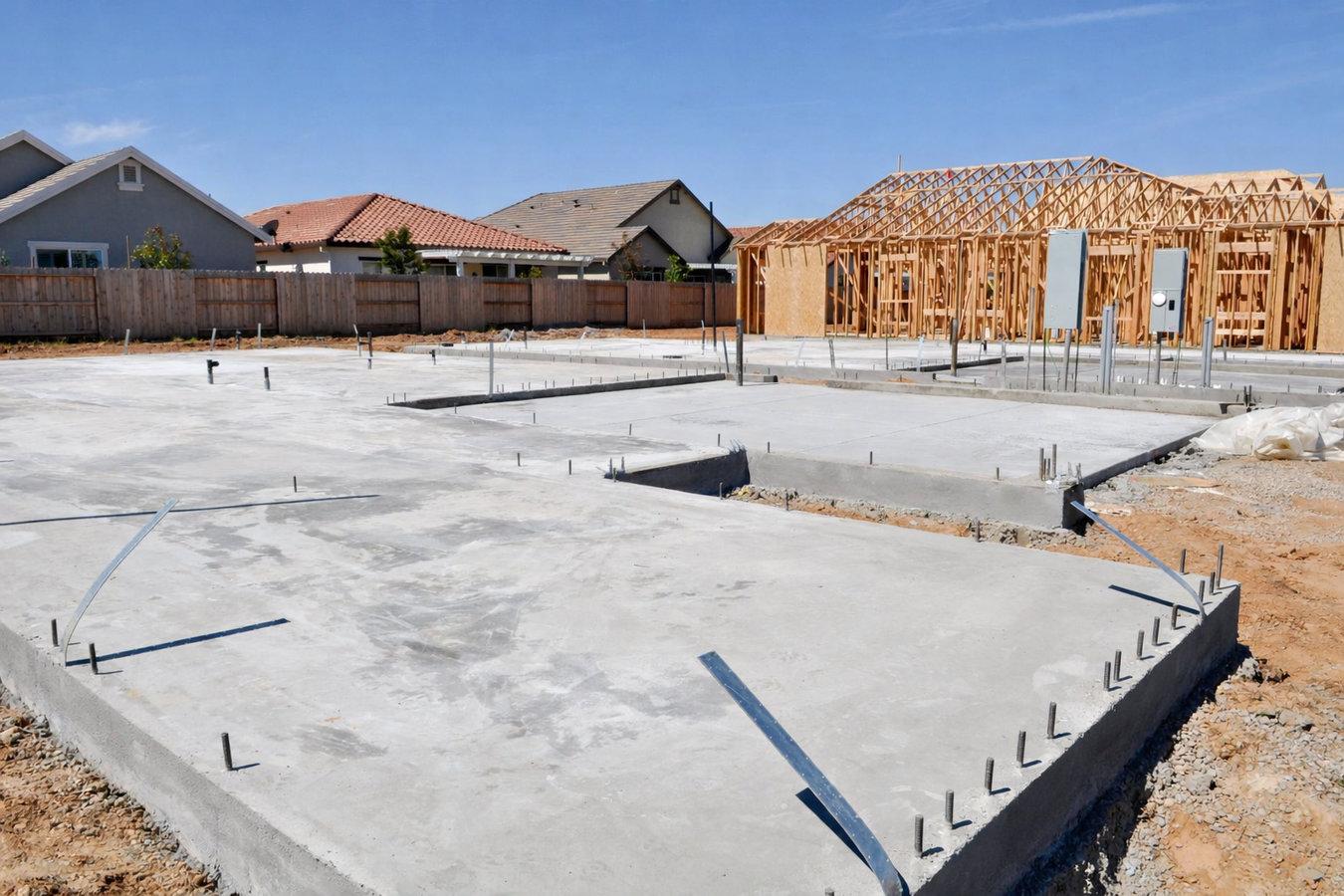
Everything your home stands on depends on this one pour. We install foundations in Edinburg with thorough site prep for Valley clay soil, city permits handled for you, and curing practices that give the concrete time to reach full strength before framing starts.
Foundation installation in Edinburg, TX means preparing the ground, setting steel reinforcement, pouring a concrete slab designed for local clay soil conditions, and seeing it through a full curing period - most residential projects run two to four weeks from site prep to final city inspection sign-off.
In the Rio Grande Valley, foundation work is not interchangeable with foundation work anywhere else. The heavy clay soil under Edinburg moves with every wet and dry cycle, and a foundation that was not designed for that movement will crack and settle within a few years. That makes local experience - not just the lowest bid - the most important factor in choosing who pours your slab.
If you are also evaluating your options for a new build, our slab foundation building service covers the full engineering and permitting process for new residential slabs, and our concrete parking lot building service handles commercial and multi-unit paved surfaces on the same high-prep standard.
If doors or windows have started sticking, dragging, or no longer close flush with the frame, the structure may be shifting. In Edinburg, this often happens after a dry summer followed by heavy rain - the clay soil swells and moves, and the foundation moves with it. It is worth having a contractor take a look before the problem gets worse.
Small hairline cracks in drywall are common and usually harmless, but diagonal cracks running from the corners of door frames or windows - especially if they are growing - can signal that the foundation is settling unevenly. This pattern is particularly common in older Edinburg homes built before contractors fully accounted for the region's expansive clay soil.
Walk slowly through your home and pay attention to whether the floor feels level. If you notice a slope, a soft spot, or a section that feels different underfoot, the slab beneath may have shifted or developed a void underneath it. This is more common in homes that have gone through several dry-wet cycles in Edinburg's climate without proper drainage around the foundation.
If you are building a new home in Edinburg or adding a room, garage, or accessory dwelling unit to your property, you need a foundation installed before any framing can begin. This is the starting point for the entire project, and getting the soil prep and slab thickness right determines how well everything built on top of it holds up over the years.
We handle every phase of foundation installation - from clearing and grading the lot through final city inspection. That includes soil compaction, gravel and fill placement, form setting, moisture barrier installation, steel reinforcement, the concrete pour, surface finishing, curing management, and permit coordination. We also offer slab foundation building for homeowners who need a complete engineered slab for new construction, and concrete parking lot building for commercial projects that require the same careful ground preparation on a larger footprint.
The American Concrete Institute sets the professional standards that govern how foundations are designed and built across the country, and those standards - from rebar sizing to curing practices - inform how we approach every project. The National Association of Home Builders also publishes guidance on evaluating foundation quality that is useful reading for any homeowner starting this process.
Suits homeowners building a new home. Covers full site preparation, rebar placement, city permitting, the pour, and curing support through the critical first weeks.
Suits homeowners adding a room, garage, or separate structure. The new slab is matched and tied to the existing foundation to prevent movement and separation over time.
Suits homes with minor surface damage, heaved sections, or spalling. We assess whether repair or full replacement is the right solution before recommending a path forward.
The clay soil across Hidalgo County is one of the most reactive soil types a concrete contractor works with. It swells during the summer rainy season and contracts during the long dry stretches that follow - and it does this year after year, putting continuous stress on any slab that is not designed with that movement in mind. Edinburg has grown rapidly over the past decade, with new construction spreading across neighborhoods near McAllen and into areas that have never been built on before. In those newer areas, soil conditions can vary significantly from one lot to the next - another reason an on-site visit before quoting is not optional.
Parts of Edinburg and the surrounding communities - including lower-lying areas near Donna and the drainage channels that run through Hidalgo County - sit in or near FEMA-designated flood zones. A foundation in one of those zones must meet elevation requirements that affect both the design and the cost. We check every property's flood zone status before the design is finalized, so there are no surprises once the permit comes back. The USDA Web Soil Survey is one of the tools we use to understand what is under a specific lot before the crew shows up.
Reach out by phone or contact form. We respond within one business day. We will ask the size of the area, whether it is new construction or a repair, and your general timeline. Because soil conditions vary across Edinburg, we schedule a free on-site visit before giving you a written estimate - a phone quote alone is not reliable for foundation work here.
We apply for the City of Edinburg building permit on your behalf - typically a few business days to a week. Once approved, the crew clears and grades the lot, compacts the soil, and adds gravel or fill material as needed to manage the clay soil's tendency to shift. This phase usually takes one to two days.
The crew sets forms and places the steel rebar grid inside them. You can see the steel before the pour - it should look neat and evenly spaced. A city inspector then visits to confirm the reinforcement meets code before any concrete is ordered. This pre-pour sign-off is required and works in your favor.
The concrete truck arrives early morning to beat South Texas heat. The crew fills, spreads, and finishes the surface in a single day, then begins curing - keeping the slab moist for the critical first week. A final city inspection closes out the permit. We walk you through the finished slab before signing off.
We visit your lot before we quote you - because every property in Edinburg is different, and a phone number is not a real estimate.
(956) 957-0103Most foundation failures in this region start with inadequate site preparation. We compact the subgrade, add gravel base material, and size rebar for local clay conditions before a drop of concrete is poured. That preparation is what separates a stable foundation from one that starts settling in the first few years.
We handle the City of Edinburg permit application, manage the required pre-pour and final inspections, and give you documentation at the end. You never have to chase the permit office yourself. A permitted foundation on record also protects you when it comes time to sell or file an insurance claim.
Edinburg's heat regularly tops 100 degrees, and surface heat can cause freshly poured concrete to dry before it finishes curing underneath - producing a slab that looks fine but is weaker than it should be. We pour early in the morning and keep slabs moist through the curing window. The extra care in the first week determines strength over the next 30 years.
Parts of Edinburg near drainage channels sit in FEMA flood zones where slabs must be elevated above a set height. We verify your lot's flood zone status before we design or quote your foundation, so the number you agree to is the number you pay. The{' '}<a href='https://msc.fema.gov/portal/home' target='_blank' rel='noopener noreferrer' className='text-primary underline hover:no-underline'>FEMA Flood Map Service Center</a>{' '}is the official tool we use to make that determination.
A foundation is the one part of your home you can't go back and fix without a major disruption. The details - soil prep, rebar sizing, curing time, permit documentation - are what separate a foundation that holds for 30 years from one that shows problems in year five.
Verify contractor registration through the Texas Department of Licensing and Regulation. Check your property's flood zone status at the FEMA Flood Map Service Center.
Commercial-grade concrete parking surfaces built for heavy vehicle loads and Edinburg's climate extremes.
Learn MoreNew residential slab foundations engineered specifically for Rio Grande Valley clay soil conditions.
Learn MorePermit season fills fast as the Rio Grande Valley building season peaks - reach out now to get on the schedule before summer heat sets in.